- Home
- Wild Foraging
- Inland Harvesting
- Broadleaf Dock
Foraging
for Broadleaf Dock in Western Oregon: Your Complete Harvesting Manual
By Nestucca Valley Sporting Goods & Little Nestucca Deli
Broadleaf
dock (Rumex obtusifolius, also known as bitter or butter
dock), is one of my
favorite wild edible plants because:
- I can harvest it most months of the year
- Wild broadleaf dock is easy to identify
- I use all parts of the plant
- It thrives in a variety of environments
- Broadleaf dock has a long shelf life in your refrigerator
- It has multiple uses
- Preparing and storing your Oregon broadleaf dock is simple
- And more!
As we cover the points listed above...
Be assured that my information is sourced from my years of successfully harvesting this plant...
…including pointers from other foragers I trust.
This is a young, local, broadleaf dock plant from early in the year. I harvested leaves,stems, and seeds from it multiple times throughout the fall...
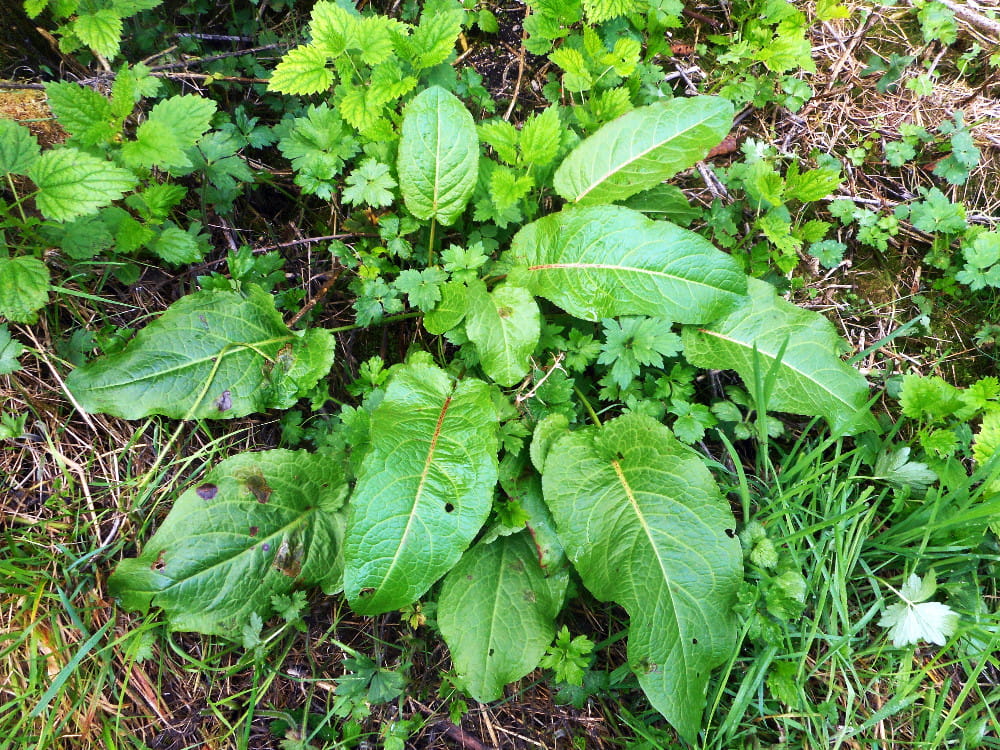 Those harmless spots are from the cold, wet, and warm temperature fluctuations early in the year
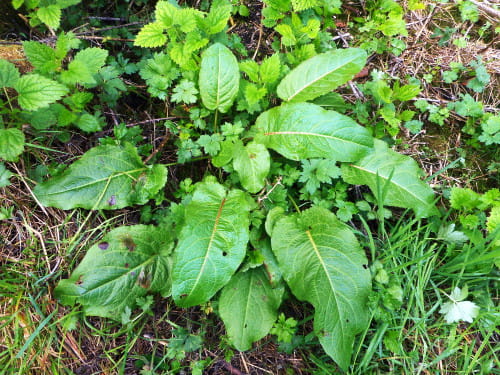 Those harmless spots are from the cold, wet, and warm temperature fluctuations early in the year
When
Can I Harvest Broadleaf Dock?
I live in the foothills of the Oregon central coast range. Generally... I can harvest this plant from April – November. I've actually picked it sporadically throughout the winter in isolated, warmer, sheltered micro-climates. I frequently find small, tender basal rosettes... growing low to the ground... offering fresh salad greens!
Lower elevations tend to have a
longer growing season, while the season is shorter at higher or
shadier areas.
Wild Broadleaf Dock Leaves
The leaves of the plant are available April – November. It's best to harvest the leaves before or after the seed stalks are developing for optimum nutrition...
But I make exceptions if I need a batch :-)
Roots
Although it makes sense that the roots are most nutritious when the other plant parts aren't developing... as with leaves... I do make exceptions. Harvest the roots during the winter, but... the above-ground plant parts, except for some seed stalks, are gone. Locating the roots becomes difficult at this time.
Seeds and Seed Stalks
I harvested a couple of of these wild broadleaf seed stalks and used them in my tea with other wild plants...
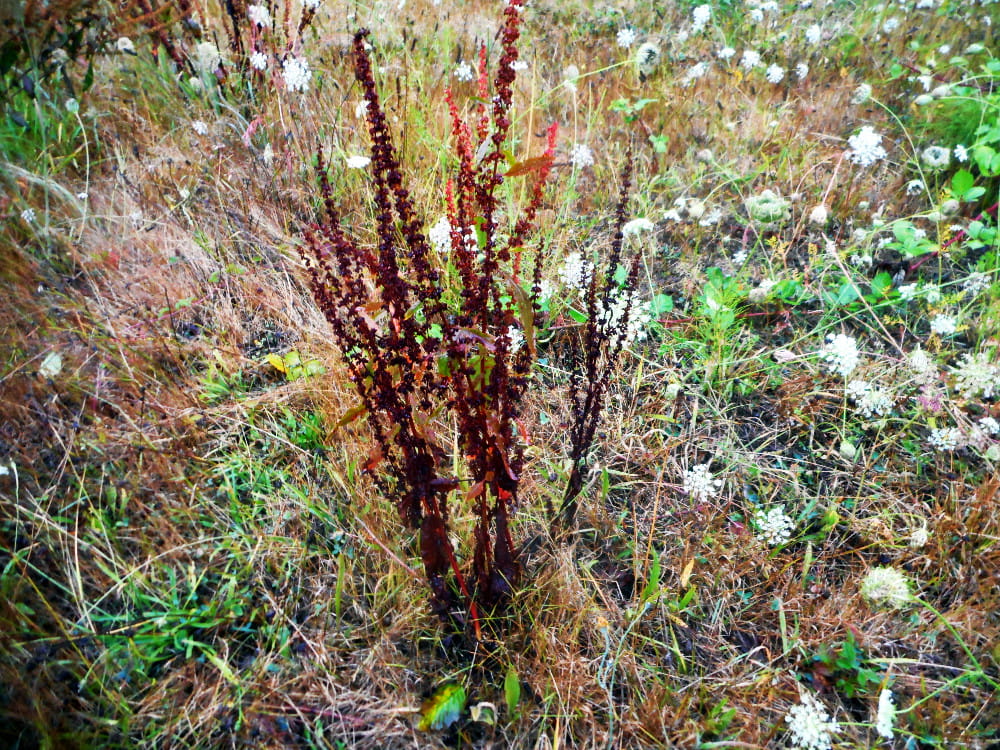 I've read that the dried dockweed seeds make tasty flour
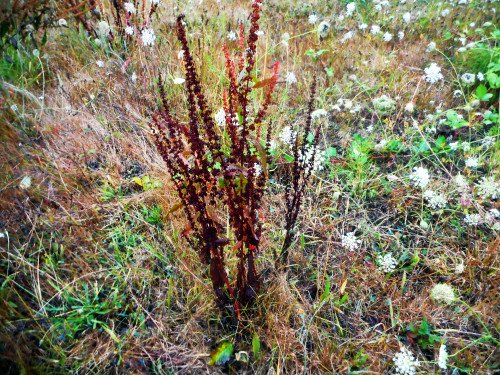 I've read that the dried dockweed seeds make tasty flour
I harvest the seeds during all stages... from early development until the winter months, when the only remaining part of the plant is the seed stalk. I've seen some seed stalks last throughout the winter!
Wild Broadleaf Dock Harvesting Exceptions
My brother has a large metal shop with a southern exposure receiving lots of sun (when available) during the winter. I occasionally make a trip to this little wild foraging micro-climate during the cold weather months.
Identifying My Favorite Wild Plant: Dockweed!
Positive identification is easy. This is the first plant that I picked when I started harvesting wild edibles because of this feature (and availability).
Whole Plant in General
A young dockweed plant will appear as a rosette of leaves, close to the ground, then bush-like, and finally more vertical. As the plant grows and matures in the region where I live... it will reach heights of 4-5' to the top of the seed stalk (which develops later in the summer).
The dockweed seed stalks will extend vertically beyond the leaves and will be the only part of the plant visible...
...after the leaves die off... sometimes late into the winter.
I asked the Forestry Department not to mow this field... the seed stalks stick up like a sore thumb into the winter!
Wild Broadleaf Dock Edible Leaves
The mature dock leaves are fairly wide and are sometimes called “Mother Nature's toilet paper." The really young leaves, at times, seem to be narrower. There are two other types of wild dockweed (that I know of)...
Curly dock and sheep's sorrel, and both are edible:
- Size: I've harvested leaves up to a foot long and 5-6 inches wide!
- Texture: The surface of wild, broadleaf dock leaves are smooth
- Appearance: The edges are
slightly rippled. Leaves are a vibrant green. There is a distinct
vein running up the middle (sometimes red) of the broadleaf dock
leaf, with smaller veins branching off of it. I've
harvested oval and oblong dock leaves, although I've heard that the
leaves can be spear-shaped.
The underside is a lighter shade of green. Early and late season wild broadleaf dock leaves seem to develop spots, probably due to the moisture and colder temperatures. I harvest them anyway, unless they're really damaged.
This young broadleaf dock leaf and seed stalk were blended in my vegetable puree...
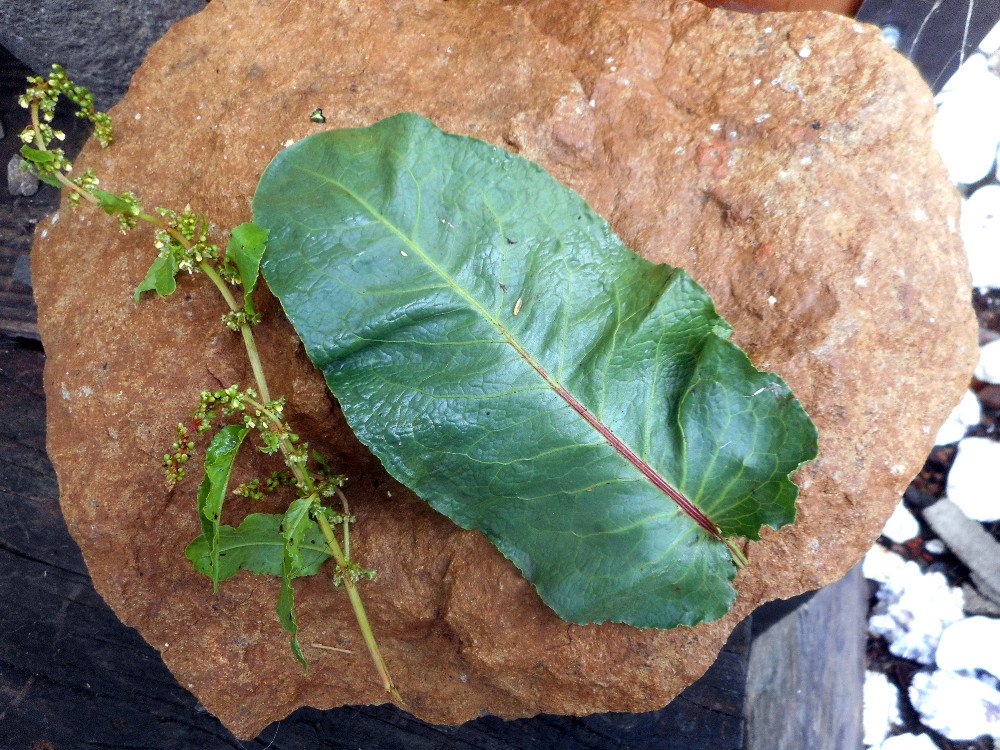 These hardy dockweed leaves and seeds will last a long time in my refrigerator
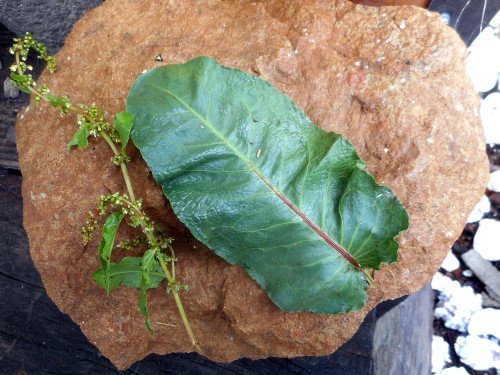 These hardy dockweed leaves and seeds will last a long time in my refrigerator
Stem of the Dockweed Plant
You'll notice a light groove running the entire length. The large, mature plants are supported by a fairly thick, central stem which, along with the mature seeds, may appear reddish-brown.
Young stems are green. Keep in mind... my observations are based on the plants I see and harvest... the broadleaf dock stems in your area might appear slightly different. When the leaves are gone... you'll see the tall seed stalks towering over the other vegetation through the winter!
Seeds
Young, immature seeds are green and will crush easily. As they mature, I've seen them change from green to reddish-brown, then finally a very dark brown with a firm texture.
Roots
To be honest with you, I've never harvested the roots for no apparent reason. This is probably because I harvest the roots of other types of plants (dandelions) that are more abundant.
“What Are the Best Locations for Harvesting Wild Broadleaf Dock?”
Before this (my favorite) field was recently mowed... I was able to forage plenty of dockweed...
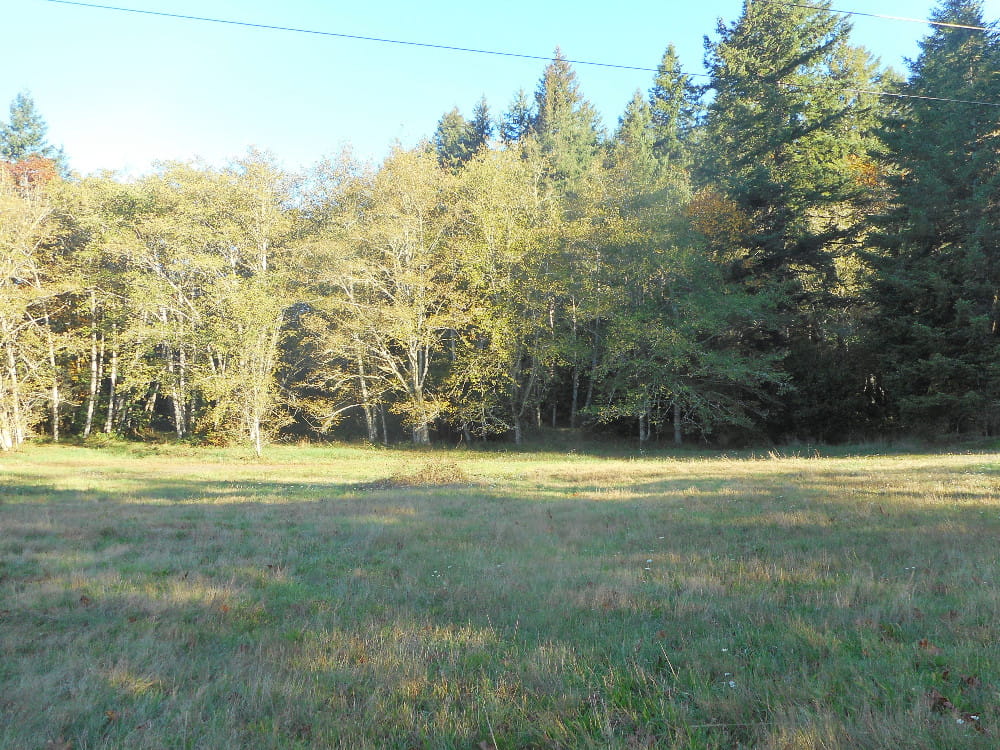 I also harvest queen ann's lace, plantain, clover, and dandelion look-alikes here!
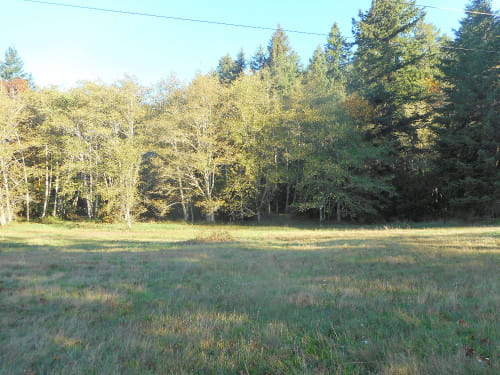 I also harvest queen ann's lace, plantain, clover, and dandelion look-alikes here!
This wild edible seems to be fairly tolerant of a diversity of microclimates.
These are the areas where I've observed and/or harvested my broadleaf dock in direct or partial sunlight:
- Open fields
- Along edges of clearings
- Along edges of roads and trails
- Growing alongside barns and other structures
I've never seen it growing under the dense forest canopy. Also, it seems to favor areas where other plant-size competition is fairly low to the ground.
Toxic Look-Alikes
There
are no known
broadleaf dock toxic look-alikes that I'm aware of.
“What About Oxalic Acid and Human Consumption?”
Oxalic acid, also found in rhubarb leaves and spinach... is also present in broadleaf dock in high amounts. Boiling the wild broadleaf dock leaves and discarding the liquid...
...will remove most oxalates. However, this will also destroy a good portion of nutrients.
- Kidney stones: Those of you that are prone to kidney stones might take this into consideration
- Skin Dermatitis: In some cases, mild dermatitis may be an issue
Tip: My
Take on Oxalic Acid Consumption
My rule has always been “Moderation and Variety.” If you eat a good variety of plants and other foods (which you should be) and not focus on just certain types... you won't have issues. Diversity also provides a large array of nutrients!
Livestock and Poultry: Broadleaf Dock Leaf Toxicity
Cattle, sheep, and horses: Large amounts can make these animals ill
Poultry: Excessive consumption of wild, broadleaf dock seeds can also be toxic
Worth repeating: Always think moderation and variety
Harvesting
I harvest and eat all parts of the plant except the roots. As I mentioned before, some parts, as with other plants, might be distasteful. I can mask that by pureeing with other plants or drying...
Then using it in my health drink with other dried plants while including a tasty base mixture.
Harvesting sustainably
- Roots: Even though broadleaf dock is abundant... the field that I harvest
from (close to home) is occasionally mowed. There are other places
that I frequent close to home, but it's not as abundant
I don't want to remove the entire plant (roots)... while waiting for the mowed dockweed to grow back. The roots are most nutritious when the rest of the plant growth has slowed down - Seeds: Always
leave most of the seeds for reproduction. However... If you harvest
all of the seeds from a plant while the growing season is still in
full swing... all of the seeds will grow back. Some plant parts,
like seeds... are packed with nutrition (a little bit goes a long
way!)
I harvest the seeds during all growth stages, even during the winter when the seed stalks are the only visible field plant visible in the snow - Leaves: If leaves are abundant, just take the big mature leaves (that are
still growing... vibrant and green)... while leaving the small,
younger leaves to develop. If the broadleaf dock is really
abundant... pick any size leaf you prefer.
Young, under-developed leaves are said to be most nutritious. I don't worry about this since, overall... wild plants are much more nutritious than store-bought anyway - Stems: I harvest the stems as well. The big, thick, central stem is not palatable fresh, but I'll harvest it for drying, then grinding into a powder
Uses
As with many other wild plants... there are many uses for your wild broadleaf dock... which can be used fresh in salads, cooked, dried, or used medicinally.
I'm sun-drying my wild broadleaf dock leaves and seeds (back/right)... along with some other plants that I harvested...
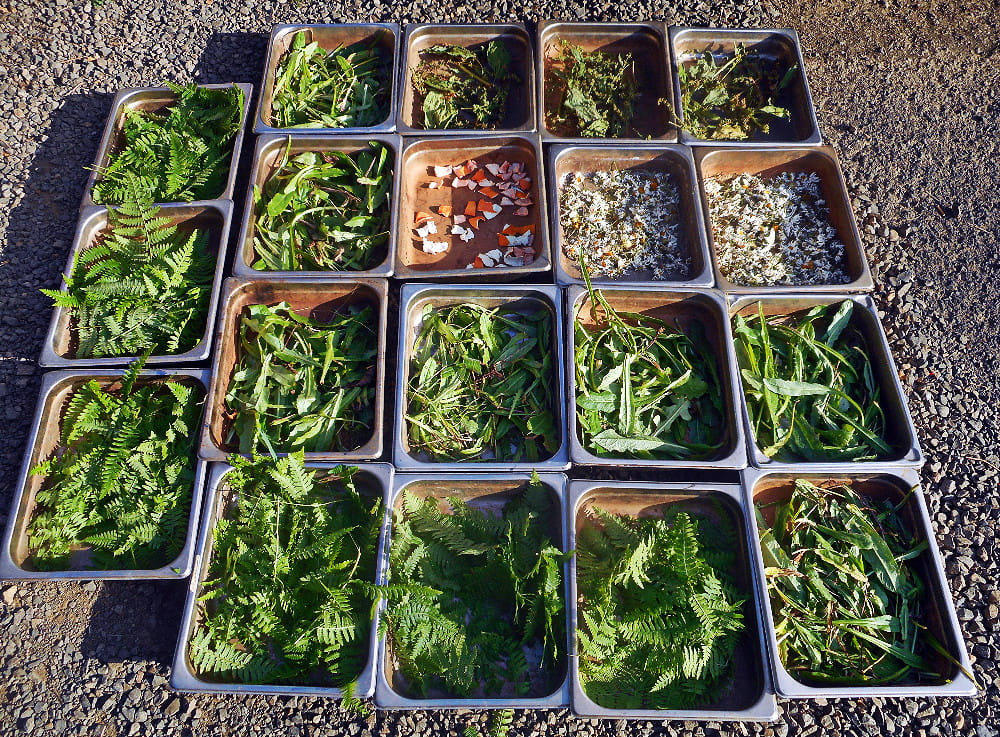 I'm able to sun-dry my forage from April (at times) all the way into October!
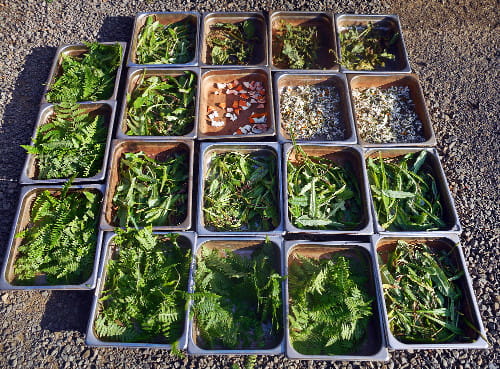 I'm able to sun-dry my forage from April (at times) all the way into October!
Leaves
- Fresh: The young, tender leaves should be harvested if you want to include them in your salad. The older leaves become bitter... the young leaves have a sharp, lemony, bitter-tart taste. I blend them into my veggie puree
- Cooked: It seems the preferred choice is to blanch, boil, or saute'. Cooking reduces oxalates and bitterness. Remove the liquid after
boiling if you're worried about oxalates... keeping in mind you're also
removing some nutritional benefits
- Dried: Broadleaf dock dries fairly well... some leaves turn dark and discolored which should be discarded (I dry them in the sun... you might have different results with a drier). They can be ground up into a powder and used as a condiment or in your health drink
- Teas: I include the fresh or dried and crushed leaves in my teas
- Medicinal: Crushing and rubbing leaves can relieve the sting from stinging nettles and provide relief from insect bites and itching. When used as a compress or salve, it may provide relief for burns, blisters, scalds, sprains, sores, and bruises. Because of the laxative and astringent qualities... they are used traditionally in mild herbal preparations
- Precautions: Due to oxalate content... consume moderate amounts
Wild Broadleaf Dock Seeds
- Fresh: I mix the young, green seeds... or mature, brown seeds (right from the seed stalk)... with other vegetables and puree in my blender. This hides the bitter taste while making them easy to digest when eaten fresh
- Cooked: I've read that you can toast the seeds in a pan for about 10 minutes. It will bring out a nutty flavor, similar to buckwheat or rye
- Dried: You can grind the seeds into a flour and mix with other flours since they are fairly bitter. I grind the dockweed seeds up and add them to my health drink
- Tea: I add the whole broadleaf dock seed, dry or fresh, to my tea. I simmer for about 5 minutes in water, then add the broth to the rest of my tea
- Medicinal: I read that the seeds are used for respiratory support and astringent actions. The roots and leaves are much more prominent in traditional herbal medicine
- Precautions: The seeds, like other parts of the plant, are also high in oxalates
Note:
If you harvest the seeds late in the year, they are already
dried on the seed stalk. However, I dry them in the sun, just to
make sure they are completely dry... because I also store them for a
long time.
Stems
Broadleaf dock stems don't receive the attention they deserve. Then again... I use all parts of the plant but usually leave the roots intact (like most other species)...
...except abundant plants such as dandelions, which seem to be everywhere around here.
- Fresh: I'll puree the young stems with the leaves in my veggie puree with other veggies. The younger stems and petioles can be used in soups and stews... acting like a natural thickener.
- Cooked: I include the young stems with the leaves, steamed or boiled.
- Dried: I dry lots of stems, usually the larger, more mature ones. They dry fairly easyily and almost 100% successful. I use them in my teas or grind into powder for my health drink.
- Teas: I use the dried stems for making tea, combining them with the other plant parts or different plants
- Medicinal: Fresh stems can be gently heated and mixed with oils like coconut oil, then firmed up with beeswax to make a skin salve that is very soothing. I have not tried this but heard about this recipe from a reputable source.
- Precautions: Because of high oxalic acid... large amounts may contribute to kidney stones and digestive irritation.
Roots
- Fresh: Blend in with a veggie puree because fresh roots are woody, bitter, and astringent. May cause stomach upset if eaten in large quantities. Just follow my Golden Rule: Moderation and Variety with all different types of plants or other foods
- Cooked: I've never cooked them... I'm sure they're not palatable this way
- Dried: Easy to dry. When drying roots, I do not chop into pieces first, unless the root is really large. I prefer to dry the broadleaf dock roots whole (and other roots), then break them into smaller pieces for storing
- Teas: Simmer in water for at least a few mniutes (dried or fresh), then strain
- Medicinal: The dried roots can be used to make tinctures or ground into powder
- Precautions: Possible digestive upset (large quantities). High oxalate levels can bind with calcium to form kidney stones
Cleaning Your Wild Dockweed Harvest
A word about washing: I've never washed the plants that I pick. I shake as much dirt off the roots as possible; that's it. I believe that scrubbing and washing removes some or most of the beneficial micro-organisms. If you do, just rinse them. Then, use them fresh or dry for later use.
Storing Your Wild Dockweed Plant
Since you are harvesting these nutritious, wild plants yourself... along with the fact that they are probably hardier than store-bought produce...
Long-term storage is possible!
Fresh
- Leaves: These nutritious greens will store in your refrigerator for a remarkably long time... I've kept them up to 3–4 weeks in covered food storage containers...or toxic-free, organic produce bags, with the top of the bag gently folded down. I've stored them damp or dry (never dripping wet)
- Stems and roots: These broadleaf dock plant parts will store for over a month in your refrigerator (store as noted above)
Dried
- Leaves, roots, and stems: You can store them indefinitely in a sealed container. I use jars. Store in a cool, dry area, away from the sunlight.
Nutritional Features of Wild Broadleaf Dock
I never spend time breaking down (or keeping track of) the nutritional content of every plant I harvest.
I know that wild plants are much
more nutritional than store-bought. And, by following my golden rule
of Moderation and Variety...
- ...you'll get all the nutrition you need...
- ...and not too much of any one thing
This includes eating all types of plants and all parts (flowers, stems, seeds, leaves and roots). Eating them in a variety of ways is the icing on the cake.
Successfully Foraging Your Wild Broadleaf Dock
Hopefully you're all set to forage your first wild broadleaf dock! When I first started... I didn't know what to expect.
Now... I catch myself searching for plants every morning on our way back, after running up our Oregon inland coastal workout road...
...or hiking out from my beautiful trout fishing stream!
Because of its availability, easy preparation, simple identification, storage, and multiple uses... it's definitely one of my favorites!
Frequently Asked Questions
There
is a Paper-Thin Sleeve Around the Stem... What is This?
You'll notice this papery sheath, where the leaf meets the stalk, wrapped around the stem joints. This is a perfectly normal botanical feature called an ocrea...
...and confirms that you have successfully harvested a wild Rumex species. Members of the buckwheat family (Polygonaceae) have this signature trait.
Is Broadleaf Dock Native to Western
Oregon?
No. It was introduced from Europe and is considered a perennial weed. It thrives successfully in our Western Oregon wet climate areas such as fields, pastures, and riparian zones.
Actually, it is considered an invasive weed, so harvesting it will help control its spread... and is considered an environmentally friendly practice.
What is the Difference Between Curly
Dock and Broadleaf Dock?
Both are common to the Pacific Northwest and belong to the Rumex genus. Curly dock (Rumex crispus) has lance-shaped leaves that are much narrower. The edges are crinkled and wavy.
Broadleaf dock (Rumex obtusifolius), has ovate, very large, and wide leaves that are heart-shaped at the base. Curly dock is considered less bitter, but both are edible.
Nestucca Valley Sporting Goods and Little Nestucca Deli
31020 US 101 Hebo OR 97122
Phone: 503 392 4269
Safety
Disclaimer
The information provided regarding wild foraging is intended strictly for educational and informational purposes, carrying inherent risks of severe illness or poisoning from toxic species.
Users must verify
absolute identification through multiple reputable field guides and
experts, as well as assume full personal responsibility for legal
compliance, environmental hazards, and health safety.
Our Dockweed Page is Under Construction!
We're roll'in up our sleeves and finally building a page for our Hebo Deli and Sporting Goods business...
...about foraging for wild broadleaf dock! We thought it would be a great idea to go live asap instead of...
...waiting until the final completion date. We're designing as we go along...
If there's something that you don't like (format, color, links that aren't working, image size, etc.), chances are we're aware of it and...
...it'll get adjusted as we progress. Additionally...we've got tons of our own photos... no stock images allowed here!
We know you'll like the final product...
Nestucca Valley Sporting Goods
Home > Wild Foraging > Inland Harvesting > Broadleaf Dock Back to Top

Join Us on Social Media!






Be Sure to Check out Our Monthly News Bulletin!
You won't regret joining...
Like candy, once you read (eat) your first... it'll seem like eternity 'till the next issue shows up in your inbox! Furthermore...
We will never, ever, share your personal information with anyone else. Period. Just click here to enroll now... it's quick and easy :-)
Advertise Your Business with Us!
While we're constantly building and updating...our Nestucca Valley Sporting Goods and Deli store and website keep growing!
Do you have an antique shop in Cloverdale?
Vacation rentals right on the Pacific City / Cape Kiawanda beach?
Guided fishing trips on the Nestucca or other Tillamook County rivers?
Upcoming community events?
Another type of business?
Be one of the first... here's more!
Be One of the First to Receive Our
Monthly Bulletin!
Join our community for upcoming events, tips, fishing reports and more...
We Provide Shuttle Service for Our Hebo Area Salmon and Steelhead Streams!
We are booking and running shuttles from...
5am to 1pm, 7 days a week...
Our store is open 5am–4pm.
Questions or need more info?
Call us at 503 392 4269 or click here.
"Hey dad... check this out!"...
What Do You Need?
We've got tasty homemade deli treats and...

...cool outdoor shirts...
...plus the equipment you really need...
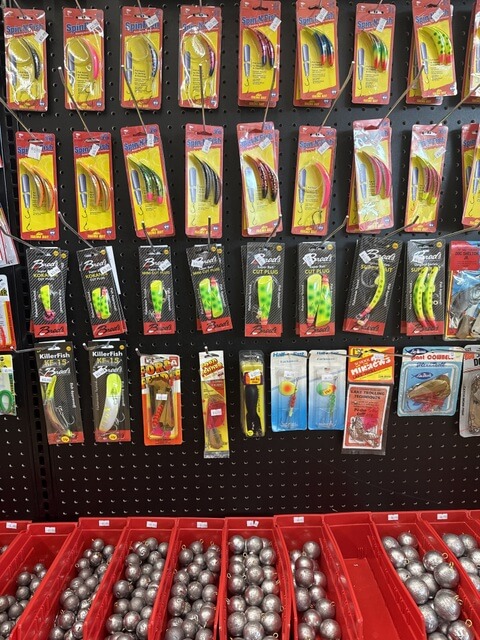
...and more!
Visit Here Often..
...we're really buzz'in around here and exciting new things are always happening.
Menu updates and specials, reliable fishing reports, maybe an extra huge sand shrimp delivery and much more!
Be sure to check out our Blog for the latest news and updates. Furthermore... here's more on our additional Past News Blog Pages.
_______________________
Are You looking for a RELIABLE Fishing Report?
We WILL NOT blow it up... just to get you over here!
You'll find it here on our Blog Page, hot off the press!
_______________________
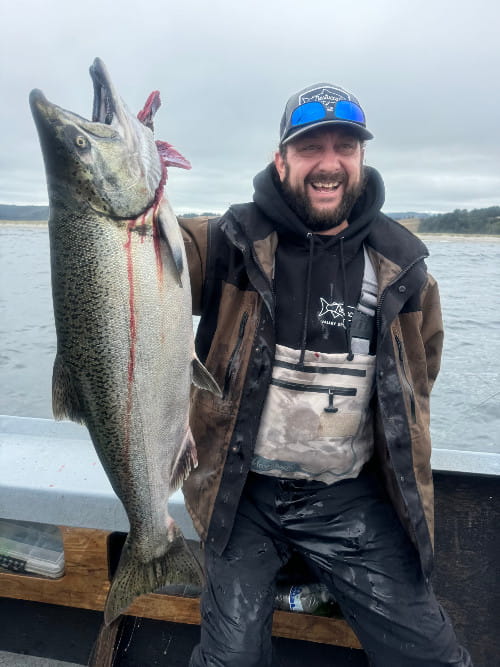
Would You Like a Picture of Your Fall Chinook Right Below?
Send it over here!
Jr with his first fall chinook nickel pickle...
Store Hours
5am-4pm 7 Days a Week
Email us here
Phone: 503 392 4269
_______________________
You'll Enjoy Our Social Media Fun!
Please join in!
Recent Articles & News


-
NESTUCCA RIVER IS SLOWLY RISING THIS SUNDAY AM!
Nov 08, 26 08:21 AM
Looks like, if the height prediction holds true... the Big Nestucca River will hover around 5' all week! -
Hebo Deli and Sporting Goods: Homemade Food, Tackle and More!
Nov 08, 26 08:10 AM
 Finally... a Hebo Deli and Sporting Goods that's friendly and family-owned with that small town feeling. Come meet owners Jr and Vy... they're always here!
-
Foraging For Wild Broadleaf Dock in Western Oregon
Nov 08, 26 07:45 AM
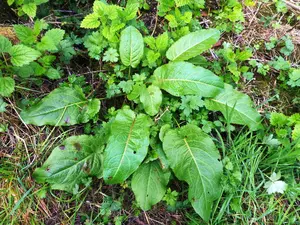 Learn all about harvesting wild broadleaf dock in Western Oregon. It's abundant, easy to identify, has many uses and easy to store: Our compete guide!
-
Use Nestucca Valley Sporting Goods Site Map for Easy Navigation
Nov 06, 26 03:48 PM
 Our Nestucca Valley Sporting Goods Store Website is growing. Use our Site Map to easily access all of our current/updated and new Nestucca Valley content.
-
Advertise Your Business with Nestucca Valley Sporting Goods and Deli
Nov 06, 26 02:59 PM
 We're growing... we've got store customers and website visitors from around the country! Advertise your business with Nestucca Valley Sporting Goods and Deli!
-
Foraging for Wild Edibles On the Oregon Coast and Inland Regions
Nov 06, 26 01:57 PM
 How to forage for wild edibles on the Oregon coast and inland region: Master harvesting, correct identification, preparation, tasty recipes, and proper storage!
-
What Shape Steelhead Spinner Blade Works Best? Decide Before You Cast!
Oct 30, 26 10:24 AM
 Different shaped spinner blades are suited for different types of steelhead water conditions. Making the correct selection is key... here's how!
-
Hebo Area Rivers are Up!
Oct 27, 26 04:04 PM
Tomorrow, Wednesday, all Hebo area salmon and sea-run cutthroat trout streams will be good to go (smaller streams today). We've got a good supply of bait, tackle, and homemade food! -
Foraging for Wild Edibles: The Oregon Coastal Inland Region
Oct 23, 26 03:44 PM
 Foraging for wild edibles inland from Oregon's beaches: My Complete Guide. Start harvesting today, winter or summer! Proper identification, uses, and more
-
A Wild Edible of Our Coastal Inland Region, Including Hebo, that I Enjoy!
Oct 18, 26 03:26 PM
I'm working on this article right now. You can still harvest the seeds for a couple months and... if you get lucky... maybe there's a few leaves available in the sheltered, warmer micro-climates! -
THREE RIVERS BANK FISHERMEN AND GALS: READ THIS
Oct 18, 26 03:14 PM
Well... it was bound to happen sooner or later... thanks to the snaggers and disrespect to the property owners. It's too bad that the real fishermen have to suffer!! -
Nestucca Valley Sports Shop and Deli Fishing Photo Gallery
Oct 12, 26 04:17 PM
 Why not share a picture of your fish on our Hebo sports shop and deli photo gallery? You won't need to tell us where you caught your prize catch!